


Bible Safari: Adventure Truth
0.00.00 Reviews
App Specs
- Version
- 1.23
- Updated On
- License
- Free
- Downloads
- 10,000+
- Developer
- Kingdom Studios Productions
- Categories
- Trivia
- Platform
- Android
Screenshots
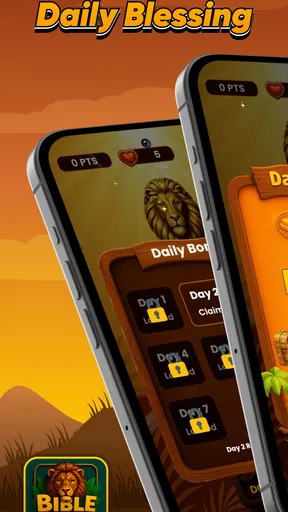




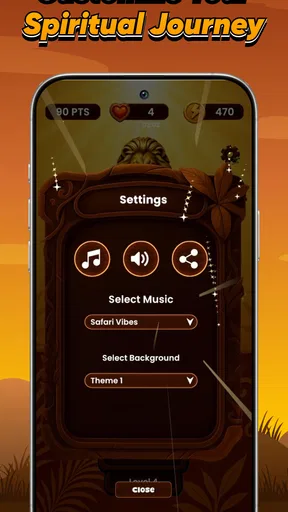
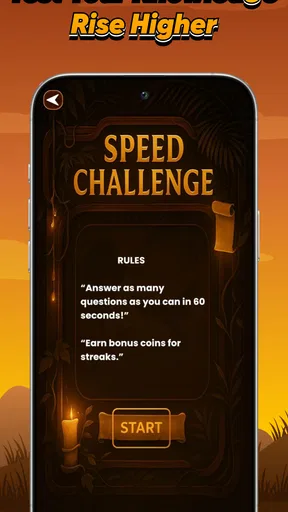
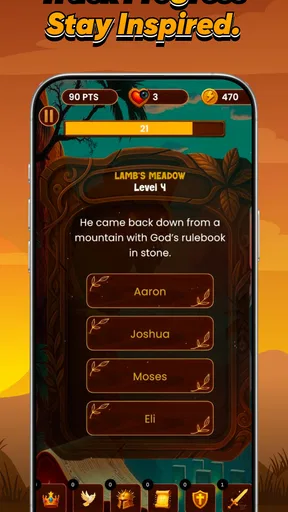
 Analysis by AppCompare
I approached Bible Safari: Adventure Truth expecting a straightforward Bible trivia game, but its appeal is a little broader than a question-and-answer test. It combines Scripture-focused trivia with word puzzles and a light reward loop, creating something that feels more like a short daily activity than a long-form adventure. That distinction matters: I would not choose it when I want a deep strategy game, but I can see the value in opening it for a few quiet minutes and turning familiar verses, names, and stories into an active recall exercise.
The game comes from Kingdom Studios Productions and is free to start, with optional in-app purchases ranging from ninety-nine cents to nineteen dollars and ninety-nine cents per item. It is rated for Everyone, which suits its accessible subject matter and gentle presentation. The current version is 1.23, and it runs on Android seven point one or later. With over ten thousand installs, it is still a relatively small title, so I treated it as a focused niche game rather than a major trivia platform.
From a simple opening to a purposeful daily routine
My first impression was that the game’s strongest idea is not competition but repetition with meaning. Bible trivia can easily become passive: read a question, tap an answer, move on. Adding word puzzles changes the rhythm because it asks me to recognize, remember, and assemble information in different ways. The result is more varied than a single quiz format, even though the subject remains tightly defined.
The “safari” framing gives the experience a sense of movement and discovery without requiring the game to become a conventional action adventure. I read that tone as an invitation to explore Scripture in small portions. It is a useful approach for players who enjoy learning through play but do not want a demanding course, a long reading session, or a competitive leaderboard-centered environment.
What I appreciate most is the low barrier to entry. A player does not need to understand complicated controls or learn a large collection of systems before answering the first question. That makes the game suitable for a personal routine, a family activity, or a conversation starter in a faith-based group. It also means the experience depends heavily on the quality and variety of its questions. If the material feels too easy for an experienced Bible reader, the reward loop may not be enough to maintain interest for long.
I would use it in a situation where I have a short break but want something more constructive than scrolling through social media. For example, after breakfast I could complete a small session, note which questions caused hesitation, and later look up the relevant passage in a Bible. In that workflow, the game is not replacing study; it is acting as a prompt that reveals what I remember and what I should revisit.
A visual language built around discovery
The safari concept gives the game a clear identity. Instead of presenting Bible questions as a plain educational checklist, it places them inside a more playful setting. That choice helps soften the feeling of being tested. I feel less as though I am taking an exam and more as though I am moving through a themed collection of challenges.
Worth Reading Before You Choose

Flipboard Shows What News Apps Must Do Beyond the Feed

Switching to Android Auto Means Rethinking Your Driving Routine

Google Calendar Makes a Crowded Week Easier to Manage

Ludo King Makes the Most of the Minutes Between Plans

Baby Panda World Brings Quick Play to Modern Phones, but Its Game Library Feels Busy

ESPN’s Live Game View Makes Following Close Games Easier
For me, the art direction works best when it supports clarity. Trivia games need readable questions, recognizable answer controls, and an interface that lets me understand progress without distraction. A decorative setting is useful only when it stays behind the content. Bible Safari: Adventure Truth benefits from keeping the spiritual subject and the puzzle activity at the center rather than burying them under visual effects.
The setting also affects the emotional temperature. A safari suggests curiosity, travel, and gradual discovery, while the Bible material brings reflection and familiarity. Those ideas could easily clash if the presentation became too loud or comic. The more successful interpretation is a calm adventure mood: the player is encouraged to continue, but not pushed into frantic play.
That atmosphere makes the game especially approachable for younger players and families, although the Everyone rating should not be mistaken for a guarantee that every question will suit every level of knowledge. A child who is new to Bible stories may need help from an adult, while a regular reader may want to treat the questions as review rather than instruction. I would play together with a younger family member and discuss the answers instead of simply handing over the phone.
One practical tip is to slow down when a question seems obvious. Trivia games reward quick recognition, but Bible questions can depend on names, relationships, locations, or wording that look similar at a glance. Taking a moment to identify exactly what the question asks turns a fast tap into a better memory exercise. That is a small change, but it makes the game more useful for learning.
Sound, pacing, and the mood between questions
The sound design matters here because the game’s subject is reflective, while its format is interactive. I prefer an audio approach that marks progress without making every answer feel like a high-stakes event. When the sound stays supportive, it helps the game maintain a steady devotional-quiz mood rather than turning Scripture into a noisy arcade challenge.
Pacing is equally important. A good session should let me move from a question to a word puzzle and back again without feeling interrupted by unnecessary complexity. The combination works because the activities ask for different kinds of attention: trivia tests recall, while word puzzles make me manipulate letters or clues in a more deliberate way. Even when the individual tasks are simple, that alternation can keep a short session from becoming monotonous.
I would not describe the pacing as ideal for everyone. Players who want rapid-fire quizzes may find the word-puzzle portions slower, particularly if they already know the answer but need time to complete the format. On the other hand, anyone who enjoys a calmer pace may appreciate that the game does not demand constant speed. The right choice depends on whether you want a quick knowledge test or a more relaxed learning activity.
The reward structure fits this rhythm when it encourages another small session rather than making progress feel like a chore. Rewards give the player a reason to return, but they should remain secondary to the questions. My advice is to treat them as a gentle nudge, not as the main objective. If I focus only on collecting rewards, the Scripture element becomes background decoration; if I focus on the questions, the rewards can make regular practice feel satisfying.
There is also a useful social possibility in the pacing. Two people can take turns answering, then explain why they chose an option. That turns a solitary mobile game into a compact discussion tool. It would work well during a family evening or a small group gathering, especially when players have different levels of Bible knowledge. The game supplies the prompt, but the conversation supplies the deeper value.
Why the mechanics fit the subject
The basic design makes sense because trivia and word puzzles are both built around recognition. Bible knowledge is not only about remembering isolated facts; it also involves connecting people, events, themes, and language. A question can check recall, while a word puzzle can reinforce the spelling and identity of an important term. That combination gives the material more than one route into memory.
I see the game as best suited to reinforcement rather than authoritative study. If I want a detailed explanation of historical context, translation differences, or the meaning of a passage, I would use a Bible, commentary, or dedicated study app instead. A trivia game can tell me whether an answer is right, but that is not the same as explaining why it matters. Using the game alongside a trusted reference is the smarter workflow.
One non-obvious advantage is that mistakes can become a personal study list. Instead of treating a wrong answer as a failure, I can write down the topic, find the related passage, and return later to see whether the correction stayed with me. This turns a casual game into a simple spaced-review routine. It requires discipline from the player, but it adds educational value without changing the game itself.
Another trade-off is accessibility versus depth. A free game aimed at a broad audience needs questions that newcomers can understand, but experienced players may quickly outgrow introductory material. I would recommend it to someone beginning to explore Bible stories, to families looking for shared screen time, or to regular readers who enjoy light revision. I would skip it if I wanted advanced theological debate, extensive commentary, or a large competitive trivia ecosystem.
The optional purchases deserve a measured approach. Because the game is free to start, I can try its core experience before deciding whether it belongs in my routine. The available items run from ninety-nine cents to nineteen dollars and ninety-nine cents each, so I would avoid buying anything immediately. I would first play enough to learn whether the questions remain engaging, whether the reward pace feels comfortable, and whether the free experience already meets my needs.
That advice is particularly important for parents. The Everyone rating makes the subject broadly suitable, but adults should still decide how purchases are handled on a shared device. I would keep spending controlled and make the game’s learning purpose clear: the value comes from thinking about the material, not from buying a faster route through it.
Where it fits among Bible and trivia alternatives
Compared with a standard Bible reading app, this game is more interactive but less comprehensive. A reading app is the better option when I want to follow a plan, compare passages, search for a verse, or spend sustained time with the text. Bible Safari: Adventure Truth is better when I need a prompt that gets me thinking quickly and makes recall feel playful.
Compared with a general trivia game, it is narrower but more coherent. A broad quiz app offers questions about science, entertainment, history, and current events, which creates more variety. This title trades that variety for a consistent Scripture-centered identity. If Bible knowledge is the subject I actually want to practice, that focus is a strength rather than a limitation.
It also differs from a traditional word-game app. A general word puzzle may have deeper vocabulary mechanics or a larger range of puzzle types, while this game uses word activity in service of its biblical theme. I would choose the general alternative for pure wordplay, but I would choose this one when I want the words to reinforce names, concepts, and stories from Scripture.
The most effective comparison is not “which app is best?” but “what job do I need the app to do?” For a five-minute reminder, this game is more inviting than opening a long study resource. For serious research, it is too light. For family participation, its shared subject gives it an advantage over random trivia, provided everyone is comfortable with the religious focus.
Who will enjoy the journey and who should pass
I think the strongest audience is made up of players who already enjoy Bible stories or want a friendly way to become more familiar with them. It is also a good match for people who like short sessions, gentle progression, and a mixture of questions and word-based tasks. The free entry point makes experimentation easy, and the Everyone rating broadens the potential audience.
I would be more cautious recommending it to someone who dislikes faith-based content, because the theme is not a minor decoration that can be ignored. I would also point experienced quiz players toward a more specialized alternative if they need difficult questions, detailed explanations, or serious competition. The game’s accessible design is part of its charm, but accessibility can also limit challenge.
Players who prefer uninterrupted reading may find the game too structured. Players who want action, strategy, or a large explorable world may also feel that “adventure” describes the mood more than the mechanics. I would set expectations accordingly: this is a Bible trivia and word-puzzle game with a discovery theme, not an action title disguised as a quiz.
For a practical routine, I would play one short session, save the topics that caused mistakes, and use those topics to guide later reading. I would occasionally play with another person and ask each player to explain an answer. I would also resist rushing through questions simply to reach the next reward. Those habits make the experience more memorable and help prevent the game from becoming a repetitive tapping exercise.
My final take on the atmosphere and the play
What holds Bible Safari: Adventure Truth together is the relationship between its theme and its mechanics. The safari setting gives trivia a feeling of movement, the word puzzles add a change of pace, and the reward loop encourages regular return. None of those elements needs to dominate. Together, they create a coherent mood that is curious, calm, and lightly playful.
My main reservation is that the same simplicity that makes the game welcoming may leave advanced players wanting more depth. It is also important to keep the purchases in perspective and to use the game as a supplement rather than a replacement for reading Scripture. Those are not small considerations, but they are easy to manage when I approach the app with the right expectations.
For me, the best use is as a daily memory prompt: a few questions, a word puzzle, and then a quick look at the passage or topic behind an uncertain answer. It can make learning feel less formal without pretending to be a full study tool. If that sounds like the kind of routine you want, Bible Safari: Adventure Truth is a thoughtful free starting point for Bible-focused play. If you need advanced theology, broad trivia variety, or action-heavy gameplay, I would choose something else.
Overall, I recommend it to families, casual learners, and Bible readers who enjoy turning knowledge into a small game. Kingdom Studios Productions has chosen a focused concept, and the result works best when played patiently. The adventure is modest, but the atmosphere gives the questions a reason to feel like part of a journey rather than isolated facts.
Pros
- Interactive Bible stories make learning Scripture engaging for children.
- Bright visuals and adventure-style gameplay can hold young players’ attention.
- Simple controls are suitable for children with limited gaming experience.
- Encourages family discussions about biblical lessons and values.
- Progression rewards can motivate children to complete activities.
Cons
- Gameplay may feel repetitive after the main activities are completed.
- Some content may require in-app purchases or additional downloads.
- The religious focus may not appeal to users seeking secular games.
- Younger children may need adult help to understand certain lessons.
- Performance can vary depending on the device and operating system.
FAQs for Bible Safari: Adventure Truth
What is Bible Safari: Adventure Truth?
Bible Safari: Adventure Truth is an educational and faith-based mobile game designed to help players explore stories, people, and lessons from the Bible through interactive challenges. Instead of presenting scripture as a simple reading experience, it uses adventure-style gameplay, quizzes, puzzles, and discovery activities to make biblical learning more engaging for children, families, and anyone interested in reviewing Bible knowledge in a playful format.
Is Bible Safari: Adventure Truth suitable for children?
The game is primarily aimed at younger players and families, with a colorful presentation and accessible activities that make the content easier to understand. Parents should still review the app’s age rating, privacy information, and any available parental controls before installation. The suitability may also depend on a child’s reading ability, familiarity with biblical stories, and how independently they use mobile devices.
Does the game require an internet connection?
Some features of Bible Safari: Adventure Truth may work without a constant connection after the application has been installed, but online access can be necessary for downloading game data, receiving updates, displaying advertisements, synchronizing progress, or using connected services. Because requirements can change between versions, it is advisable to check the store listing and test the game before relying on it during travel or in areas with limited connectivity.
Is Bible Safari: Adventure Truth free to download?
Bible Safari: Adventure Truth may be available as a free download, although free access does not always mean that every feature is included without restrictions. Depending on the version and platform, the game could contain advertising, optional purchases, locked content, or other monetization elements. Parents should check the Google Play or App Store listing carefully and enable purchase protections if children will be using the device.
What should I know about privacy and permissions before installing it?
Before downloading Bible Safari: Adventure Truth, review the application’s store disclosures and privacy policy to understand what information may be collected and why. Pay particular attention to permissions, advertising technology, analytics, account requirements, and data-sharing practices. If the app is intended for children, adult supervision is recommended, especially when the device is shared or when the game includes external links, online features, or optional purchases.


